
"Duan Zi hands"
41000 article(s) found

Would you like chopsticks for coffee? Starbucks takeout chopsticks? Shanghai Starbucks takeout launches customized tableware
Starbucks, a master of environmental protection, made everyone's eyes bright again. Starbucks takeout launched customized tableware. On June 21st, Weibo made it to the list. According to the list # Shanghai Starbucks takeout can get customized tableware # news shows that Shanghai residents can get a set of Chinese customized tableware for free when they order Starbucks takeout in the morning. Then another topic appeared on the Weibo list. Currently # Coffee and chopsticks

What is the "coffee" ecology of China?
China has been drinking tea and coffee as an imported product since ancient times, and it really came to the fore in 1997, when the carving time opened its first shop on Chengfu Street between the east gate of Peking University and the west gate of Tsinghua University. The location of the shop says it all: at that time, people's concept of coffee shop was still chaotic: China did not have coffee culture, but only coffee shop culture, so about

The difference between Taiwan Tieguanyin Oolong Tea and Phoenix Dancong Song eight Immortals and the introduction of Tea varieties
Taiwan oolong tea and Phoenix Dancong both belong to oolong tea, but they are different in origin, tree species, production technology and fermentation degree. So there is a significant difference in taste and aroma. 1. Taiwan Oolong from different producing areas is produced in five major tea areas: northern Taiwan, peach bamboo seedlings, central and southern, eastern and alpine tea. Among them, the alpine tea area refers to all the products in Taiwan Province.
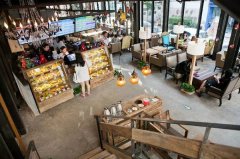
Read an article to understand China's "coffee" ecology
China has been drinking tea and coffee as an imported product since ancient times, and it really came to the fore in 1997, when the carving time opened its first shop on Chengfu Street between the east gate of Peking University and the west gate of Tsinghua University. The location of the shop says it all: at that time, people's concept of coffee shop was still chaotic: China did not have coffee culture, but only coffee shop culture, so about

JAMES CHEN, boss of FikaFikaCafe in Taiwan
One of the hot news in the world boutique coffee industry in 2016 is the fact that Taiwan's Wu Zelin won the world barista championship. A lot of media have paid attention to the new star, especially his unique extraction method and his coffee Panama Finca Deborah Geisha. However, few people know who made the coffee beans used by the champion. (some people think it's Wu Zi

I'm telling you, coffee brands don't make money from coffee.
When coffee is associated with taste and culture, it moves from the catering industry to the cultural and commercial fields. Investing in coffee shops is becoming the most popular area for investors nowadays. At present, coffee brands in the domestic market are mainly divided into European and American coffee, Korean coffee and Taiwan coffee. No matter what kind of coffee is invested, the start-up capital needs millions of yuan to start. However, the return on investment of millions of yuan does not come from

Coffee invasion! Read an article to understand China's "coffee" ecology
Wen / Chu Qiuchen shopkeeper strategy reporter China has been drinking tea and coffee as an imported product since ancient times, and the first shop was opened in Chengfu Street between the East Gate of Peking University and the West Gate of Tsinghua University in 1997. The location of the shop speaks for itself: at that time, the concept of coffee shop was still chaotic: China did not have a coffee culture, but only

In-depth good article | an article to understand China's "coffee" ecology
China has been drinking tea and coffee as an imported product since ancient times, and it really came to the fore in 1997, when the carving time opened its first shop on Chengfu Street between the east gate of Peking University and the west gate of Tsinghua University. The location of the shop says it all: at that time, people's concept of coffee shop was still chaotic: China did not have coffee culture, but only coffee shop culture, so about

Liao Zinc, a post-90s girl, takes root in his hometown to make coffee for the citizens.
With dim lights, soft music and the fragrance of coffee in the air, Liao Zinc, a post-90s girl, returned to Wanzhou with her love of coffee and held a coffee sharing party for the citizens once a month. Yesterday, she said that she liked the comfortable life in her hometown and wanted more people from her hometown to understand the coffee culture. Liao Zinc, 23, who is worried about Wanzhou's hometown, is a native of Wanzhou.

The "Xiao Qingxin" Cafe has emerged as a new force.
Warm decoration style, soft sofas, niche music, and staples and snacks mixed with local tastes, quietly read books and listen to music in this small place, or hold a notebook, brush Weibo, browse Douban, and talk with friends about their recent work and life. It is a small tone of many literary and artistic youth. I don't know when I started walking in Yicheng.
Yunnan Coffee Culture creates "Zhu Kula Ancient Coffee"
The oldest coffee tree in China grows in Zhu Kula Village, Pingchuan Town, in the Yubao River Canyon in Binchuan County, Dali Bai Autonomous Prefecture. When I came to a small hill by the Yupao River, I saw a small mountain village surrounded by a green coffee forest. This is Zhu Kula, who is regarded as a paradise on earth. Compared with the rapid changes in the outside world, the century-old house with green tiles and white walls in the village leaves spots.

Deep good text | Coffee intrusion! Read an article to understand China's "coffee" ecology
With the entry of Starbucks and other international brands, the Chinese coffee market is showing a lively scene, at the same time, the Chinese coffee consumer group is also growing. In recent years, with their accurate market positioning and unique business model, some emerging coffee brands have gradually broken the monopoly position of established enterprises such as Starbucks and Shangdao Coffee in the market, thus driving the whole coffee.
Because the guests think that 14 yuan espresso is too expensive! The coffee shop was fined 7000 yuan.
There is no place in the world where espresso is more popular than Italy. In January 2022, espresso was officially listed as a candidate for the intangible heritage of mankind by UNESCO, which shows that espresso is not just a refreshing drink for Italians.

Beijing characteristic Restaurant: who are you going to go with these 100 small and beautiful shops?
1, control address: Dongcheng District Jiaodaokou Bei er Tiao 8 is located in a rare hutong alley, decorated in the Republic of China plus French style, Chinese and Western mixed into a harmonious retro style. This retro-themed nostalgic courtyard, like a comparison of names, takes you to find the quiet and beautiful time in Zhang ailing's words with every detail. The shopkeeper wants to select it with heart in the era of fast consumption.

An article to understand China's "coffee" ecology: competition among China, South Korea and the United States
With the entry of Starbucks and other international brands, the Chinese coffee market is showing a lively scene, at the same time, the Chinese coffee consumer group is also growing. In recent years, with their accurate market positioning and unique business model, some emerging coffee brands have gradually broken the monopoly position of established enterprises such as Starbucks and Shangdao Coffee in the market, thus driving the whole coffee.

Guangfo's first music-themed coffee bar opens
Recently, Yihe Shengshi Higan Coffee Bar has been in low-key trial operation, bringing many surprises to project owners and surrounding residents. Coffee Bar is located in the riverside club of Yihe Shengshi 12000 square meters. It is the first music-themed cafe in Guangzhou and Foshan, and its inspiration comes from the famous Bianhua Music Festival. Take the area of four Starbucks, collect music and books Yihe Shengshi is located in Guangzhou West,

In-depth disclosure of Starbucks, coffee accompany you, diffuse coffee profit model, not rely on coffee to make money
When coffee is associated with taste and culture, it moves from the catering industry to the cultural and commercial fields. Investing in coffee shops is becoming the most popular area for investors nowadays. At present, coffee brands in the domestic market are mainly divided into European and American coffee, Korean coffee and Taiwan coffee. No matter what kind of coffee is invested, the start-up capital needs millions of yuan to start. However, the return on investment of millions of yuan does not come from

A brief introduction to the planting Market Price of Fine Coffee Bean varieties in Yunnan with humid Climate
In view of the obvious characteristics of Yunnan coffee, a typical export-oriented agricultural economy and export driven by quantity, as well as practical problems such as easy to be subject to futures price fluctuations in the international market, imperfect industrial chain, imperfect collection and storage mechanism, it is suggested that: first, give full play to Yunnan's advantages as the main producing area of coffee, establish a national coffee commodity trading center, and gradually form a connection with the international futures market.

Does Kopi Luwak taste bitter? are authentic Indonesian cat poop coffee beans Arabica beans? Flavor characteristics
Professional coffee knowledge exchange more coffee bean information Please follow the coffee workshop (Wechat official account cafe_style) before the text begins the editor asks you, do you eat shit? I think, under normal circumstances, you should answer-- "no"? If your answer is-- Yes! I eat poop! Then I can only say-- I respect your special preference, but you should stay with this kind of good thing.

The introduction of Ruili Jingpo Nongxian coffee was recorded in 1914.
In April 1996, compiled by the compilation Committee of Ruili City Chronicles of Yunnan Province, the fifth coffee section on page 383 of Ruili City Chronicles published by Sichuan Dictionary Publishing House recorded that as early as 1914, the Jingpo nationality had been introduced from Myanmar to Nongxian Township for cultivation. The local series of books of the people's Republic of China, Records of Yunnan Province, Volume 39, Records of Land Reclamation, Chapter 3, Section 2, Coffee is recorded: the cultivation of coffee in China began in 1884.